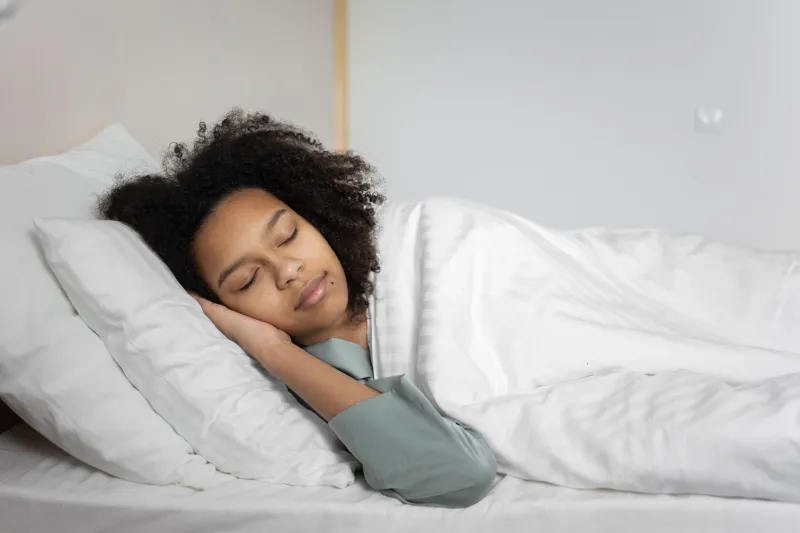
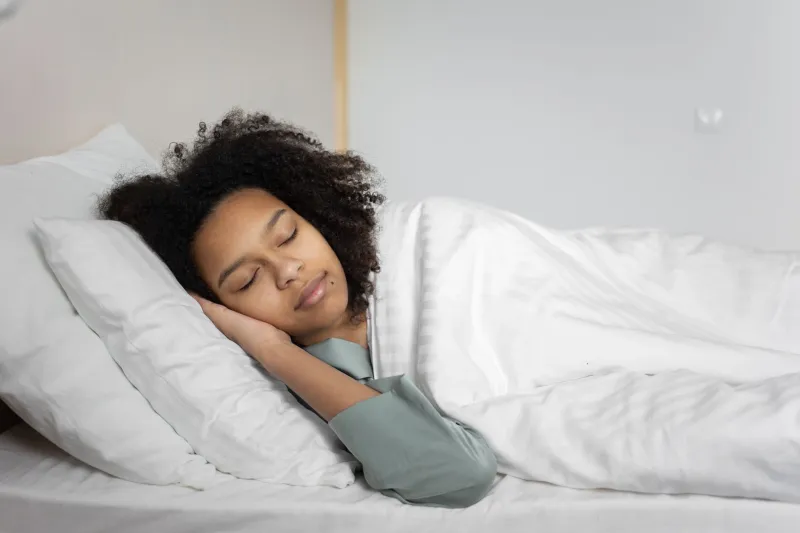
What Your Body's Stress Clock Has to Do With the Fabric You Sleep On

Most of us think of stress as something that happens to us — a bad meeting, a traffic jam, a notification we didn't want to see. But your body actually begins calibrating its stress response long before you encounter any of that. It starts while you're still asleep.
Cortisol, often called the "stress hormone," follows a natural rhythm throughout the day. It dips to its lowest point in the middle of the night, then begins a gradual rise in the early morning hours — a process scientists call the cortisol awakening response, or CAR. Ideally, this rise is smooth and proportional, giving you the alert, grounded energy you need to start the day. But when sleep quality is disrupted — even subtly — that rise can spike higher than it should, leaving you wired, anxious, or just inexplicably off before you've even had coffee.
Here's where your pillowcase enters the conversation.
The Hidden Cost of a Rough Night's Surface
You probably don't think of your pillowcase as something that could elevate your stress hormones. But your skin is loaded with sensory receptors — mechanoreceptors, to be precise — that respond to touch, pressure, and friction throughout the night. When you're sleeping on a rough or abrasive surface, those receptors don't fully power down. They keep registering low-level irritation, which can nudge your nervous system toward a state of mild alertness rather than deep restoration.
This isn't a dramatic, keep-you-awake kind of disruption. It's subtler than that. Researchers studying sleep microarousals — those brief, partial wakings that most people never consciously remember — have found that skin-level sensory input is one of the underappreciated drivers of fragmented sleep architecture. You might technically be in bed for eight hours and still be running a cortisol deficit by morning.
Conventional cotton pillowcases, especially lower thread-count varieties, create significantly more friction against your skin and hair than silk does. That friction doesn't just show up as bedhead or a crease on your cheek. It registers in your body as a form of low-grade physical stress — and over time, that compounds.
Why Silk Is Physiologically Different
Silk isn't just softer. It's structurally distinct from synthetic or plant-based fibers in ways that matter for how your body responds to it overnight.
The protein structure of silk — primarily fibroin and sericin — creates a surface that's naturally smooth at the fiber level, not just to the touch. This dramatically reduces the friction coefficient compared to cotton or polyester. Less friction means less stimulation of those skin receptors, which means your nervous system gets a cleaner path to the deeper, more restorative sleep stages where cortisol regulation actually happens.
Silk is also a natural temperature regulator. It doesn't trap heat the way synthetic fabrics do, and it's more breathable than most cotton weaves. Why does that matter for cortisol? Because thermoregulation and cortisol rhythm are tightly linked. When your body overheats during sleep, it registers that as a stressor — one that can trigger early cortisol elevation and pull you out of slow-wave sleep prematurely. Sleeping cool and comfortable isn't just about comfort; it's about giving your endocrine system the conditions it needs to do its job.
The Morning Mood Equation
If you've ever woken up feeling anxious for no obvious reason, or noticed that your stress tolerance seems lower on certain mornings, it's worth asking what happened during the eight hours before that. Cortisol that spikes too high, too fast doesn't just make you feel stressed — it impairs working memory, reduces emotional regulation, and can make you more reactive to minor frustrations throughout the day.
Research published in journals studying psychoneuroendocrinology (yes, that's a real field) has consistently shown that sleep quality is one of the strongest predictors of CAR magnitude. Poor sleep doesn't just leave you tired; it leaves you hormonally primed for a harder day.
Switching to a silk pillowcase isn't going to eliminate stress from your life. But it can genuinely change the conditions under which your body recovers each night — and that has real downstream effects on your morning cortisol profile, your mood, and your capacity to handle whatever the day throws at you.
What Dermatologists and Sleep Specialists Are Noticing
The conversation around silk and sleep health has been gaining traction in clinical spaces, not just wellness blogs. Dermatologists have long recommended silk pillowcases for skin and hair benefits, but sleep specialists are increasingly interested in the nervous system angle as well.
The logic isn't complicated: better sensory environment during sleep → fewer microarousals → more time in restorative sleep stages → healthier cortisol rhythm → better morning baseline. It's a chain reaction that starts with something as simple as what your face is touching at 2am.
Some practitioners working with patients on stress and anxiety management are now including sleep surface quality as part of their intake questions — right alongside sleep hygiene habits, light exposure, and caffeine timing. That's a meaningful shift.
Making the Switch: What to Actually Look For
Not all silk pillowcases are created equal, and the market is full of products that use the word "silk" loosely. If you're making this change for the physiological benefits, here's what actually matters:
Momme weight: This refers to the density of the silk fabric. For pillowcases, 19–25 momme is the sweet spot — substantial enough to be durable, fine enough to maintain that low-friction surface.
Mulberry silk: This is the highest-grade silk available, produced by Bombyx mori silkworms fed exclusively on mulberry leaves. The fibers are longer, more uniform, and smoother than those from wild or mixed-feed silkworms.
OEKO-TEX certification: This ensures the fabric has been tested for harmful substances — important for something that's in contact with your skin for eight hours a night.
Fit: A pillowcase that bunches, shifts, or creates pressure points defeats the purpose. Look for envelope closures or well-fitted designs that stay smooth throughout the night.
The Bigger Picture
We spend a lot of energy optimizing the active parts of our wellness routines — the workouts, the supplements, the morning rituals. But sleep is where your body actually rebuilds, resets, and rebalances. Cortisol doesn't care how good your green smoothie was; it responds to the quality of the environment your nervous system was in for the past eight hours.
Your pillowcase is part of that environment. It's not a miracle cure, but it is a genuinely underestimated variable in the stress-and-recovery equation — one that's easy to change and surprisingly impactful once you do.
If your mornings feel harder than they should, it might be worth looking a little closer at what you're sleeping on.