How Your Sleep Position Changes Everything About Your Silk Pillowcase
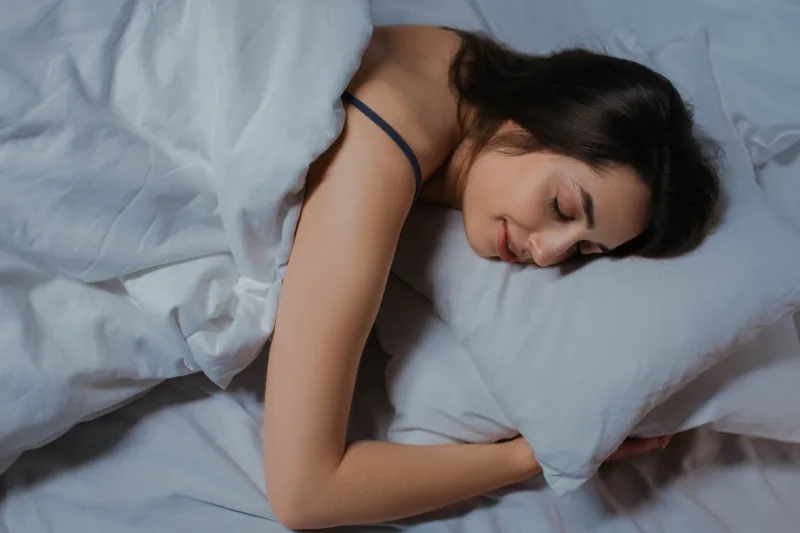
Most people buy a silk pillowcase, toss it on their bed, and assume the magic just... happens. And honestly? Some of it does. But if you've ever wondered why your friend swears her silk pillowcase eliminated her morning face creases while you're still waking up with lines pressed into your cheek — the answer might not be the pillowcase itself. It might be how you sleep.
Sleep position is one of the most underrated variables in the whole silk-for-skin conversation. The biomechanics of how your face and hair move against a surface at night are completely different depending on whether you're a back, side, or stomach sleeper. Understanding that difference isn't just nerdy wellness trivia — it's genuinely useful information for getting real results from a fabric that deserves more than a "set it and forget it" approach.
Why Friction Is the Whole Conversation
Before we get position-specific, let's talk about what silk is actually doing for your skin and hair while you sleep. The short version: it's dramatically reducing friction.
Conventional cotton pillowcases — even the ones marketed as "soft" — have a rougher fiber structure that grips your skin and hair as you move during the night. The average person shifts positions somewhere between 10 and 40 times over the course of a full night's sleep. Every one of those movements creates a small amount of drag on your face and scalp. Over weeks and months, that repeated mechanical stress contributes to sleep wrinkles, flattened hair cuticles, and the kind of dull, slightly stressed skin that no serum can fully fix.
Silk's naturally smooth protein-based fibers — sericin and fibroin, for anyone who wants the specifics — create a glide surface that lets your skin move with the fabric rather than being pulled against it. That's the core benefit. But how much of that benefit you actually experience? That depends heavily on how much contact your face and hair are making with the pillow, and for how long.
If You Sleep on Your Back
Back sleepers are, from a pure skin-and-hair perspective, working with a slight advantage to begin with. Your face isn't pressed into the pillow for hours at a stretch, which means baseline friction exposure is already lower than it is for side or stomach sleepers.
That said, don't assume you're off the hook. The back of your head — and depending on your hair length, a significant section of your hair — is in sustained contact with the pillowcase all night. If you have longer hair, that continuous low-level friction against a cotton surface can cause real cuticle damage over time, leading to frizz, breakage, and that rough texture that conditioner can only partially address.
For back sleepers, a silk pillowcase delivers its most noticeable benefits to hair health. You'll likely see less frizz, smoother strands in the morning, and over time, less mechanical breakage — especially around the crown and nape. Skin-wise, the improvement tends to be subtler but still meaningful: reduced puffiness from better temperature regulation (silk's breathability keeps you cooler, which helps with overnight inflammation), and less tugging on the delicate skin at the back of the neck.
The recommendation: Back sleepers should prioritize a momme weight of at least 19 for hair contact durability, and consider a silk pillowcase plus a silk sleep cap or bonnet if protecting hair is a top priority.
If You Sleep on Your Side
Side sleepers are where the silk pillowcase conversation gets really interesting — and where the stakes are genuinely higher.
When you sleep on your side, one half of your face is in sustained, prolonged contact with the pillow surface. We're talking potentially four to six hours of continuous compression and friction on the same cheek, the same section of your jaw, the same corner of your eye. This is the sleep position most strongly associated with asymmetrical aging — the phenomenon where one side of the face develops fine lines and volume loss faster than the other, specifically because of repeated mechanical stress during sleep.
On a cotton pillowcase, that sustained contact means your skin is being pulled and bunched slightly every time you breathe, swallow, or make the smallest unconscious shift. Silk eliminates most of that drag. Your skin can rest against the surface without being gripped by it, which means less morning creasing and, over the long term, meaningfully less mechanical contribution to wrinkle formation.
For side sleepers, silk also makes a significant difference to the hair along your temple and the side of your head that contacts the pillow — an area that's often overlooked but particularly prone to breakage and thinning over time.
The recommendation: Side sleepers arguably have the most to gain from a silk pillowcase. Look for a properly fitted pillowcase (loose cases bunch up and lose some of their glide benefit), and if you're dealing with visible sleep lines, give it a consistent 6–8 weeks before evaluating results. Skin remodeling takes time.
If You Sleep on Your Stomach
Stomach sleepers, this section is for you — and it's worth paying close attention, because you're working against yourself in a few ways that a silk pillowcase can genuinely help offset.
Face-down sleeping puts the most surface area of your face in direct, sustained contact with the pillow. Both cheeks, your forehead, your nose — all of it is pressed into the fabric for extended periods. The friction load is the highest of any sleep position, and so is the compression. This is why dermatologists consistently flag stomach sleeping as the position most likely to accelerate the appearance of fine lines and contribute to congestion from prolonged skin compression.
A silk pillowcase doesn't fix the compression element — that's a physics problem silk can't solve. But it dramatically reduces the friction component, which is meaningful. Instead of your skin being dragged against a rough cotton surface for hours, it's resting on something smooth that moves with it. That's not nothing. For stomach sleepers especially, the difference between a cotton and silk pillowcase in terms of morning skin texture can be pretty striking from the first night.
Hair-wise, stomach sleepers often experience the most significant overnight tangling, particularly if they have longer hair that ends up spread across the pillow. Silk's low-friction surface keeps strands from knotting and matting the way they do against cotton.
The recommendation: Stomach sleepers should treat a silk pillowcase as a non-negotiable rather than a nice-to-have. Pair it with a consistent skincare routine that includes hydration-focused products — silk helps your skin retain moisture better than cotton, and that benefit is amplified when you're already doing the work with your skincare.
The One Thing Every Sleep Position Has in Common
Regardless of how you sleep, there's one universal truth about silk pillowcases: consistency matters more than perfection. The benefits are cumulative. A silk pillowcase used every night for three months will do far more for your skin and hair than the most expensive one used sporadically.
It also helps to wash your silk properly — cold water, gentle cycle, no fabric softener — to maintain the integrity of those protein fibers over time. A degraded silk surface loses some of its glide properties, and that's when people start to feel like the "silk pillowcase thing" stopped working. It didn't stop working. The fabric just needs a little care to keep doing its job.
Your sleep position is something you probably can't change overnight (pun intended). But understanding how it interacts with what's on your pillow? That's the kind of personalized wellness thinking that actually moves the needle.
