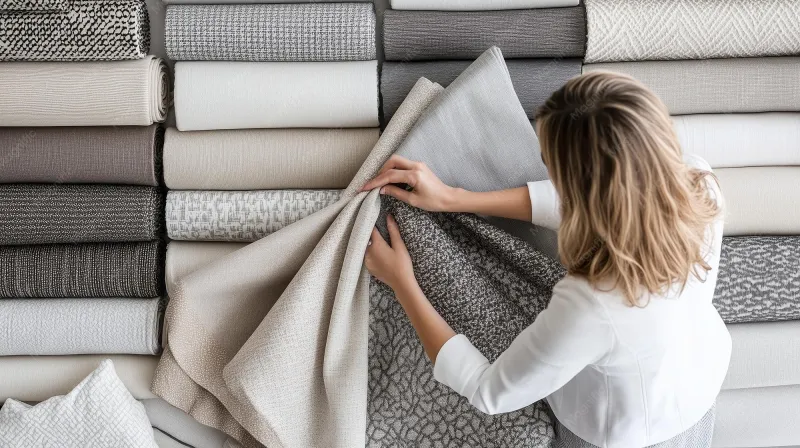
Stop Calling Silk Expensive: The Real Math Behind What You're Actually Spending on 'Affordable' Alternatives

Photo by Photo by Nylos on Unsplash on Unsplash
Let's be honest. When most people see a silk pillowcase priced at $60 or $80, their first instinct is to close the tab. It's a reflex that makes total sense — we've been conditioned to treat the sticker price as the whole story. But in wellness, the sticker price is almost never the whole story.
What if the "budget-friendly" cotton pillowcase you've been buying every eight months, combined with the extra moisturizer you slather on every morning, the hair mask you reach for every Sunday, and the occasional dermatologist co-pay for unexplained breakouts — what if all of that actually costs more than just buying the silk version in the first place?
Spoiler: it very likely does. Let's run the numbers.
The Replacement Cycle Problem Nobody Talks About
A standard cotton pillowcase from a big-box retailer runs anywhere from $8 to $20. Feels like a win, right? But cotton is a heavy-duty abrader. It pills, it fades, it loses its weave integrity faster than most people realize — especially if you're washing it weekly the way dermatologists recommend. Most cotton pillowcases are functionally worn out within six to twelve months of regular use.
A quality silk pillowcase — the kind made from long-strand mulberry silk with a proper momme weight — can last three to five years with basic care. Some people report theirs lasting even longer. Do that math: five cotton pillowcases at an average of $15 each over five years equals $75. A single silk pillowcase purchased once in that same window? Often the same price or less, and it arrives with a completely different set of properties that cotton simply can't replicate.
Now multiply that across a full set of silk bedding — a pillowcase, a sleep mask, maybe a silk scrunchie — and the durability gap compounds significantly in silk's favor.
What You're Spending to Compensate for the Wrong Fabric
Here's the part that tends to surprise people: a lot of what we spend on skincare and hair care is actually compensating for the damage caused by our textiles.
Cotton is hydrophilic — it absorbs moisture aggressively. When your face spends six to eight hours pressed against a cotton pillowcase, that fabric is actively pulling hydration out of your skin. The result? You wake up needing more moisturizer, more serum, more everything. Silk, by contrast, has a naturally low absorbency rate and a smooth protein-based surface that lets your skin retain its own moisture overnight.
Consider what the average American spends on nighttime skincare. According to various consumer surveys, Americans spend between $200 and $600 annually on facial moisturizers, serums, and overnight treatments alone. If even a fraction of that spend is driven by the dehydrating effect of synthetic or rough-weave fabrics, switching to silk isn't just a comfort upgrade — it's a potential reduction in product dependency.
The same logic applies to hair. Friction from cotton pillowcases is a well-documented contributor to breakage, frizz, and split ends. The average American woman spends roughly $80 to $200 per year on hair masks, deep conditioners, and anti-frizz treatments. A silk pillowcase reduces that friction at the source — not by adding more product, but by removing a cause of damage entirely.
The Dermatology Line Item
This one is harder to quantify, but it's worth thinking through. Dermatology visits in the US average between $150 and $300 per appointment without insurance, and even with insurance, co-pays and out-of-pocket costs add up fast. If you're seeing a dermatologist for recurring breakouts, irritation, or unexplained skin texture issues, it's worth asking whether your sleep surface is a contributing factor.
Dermatologists increasingly point to pillowcase hygiene and fabric type as underappreciated variables in skin health. Cotton pillowcases trap bacteria, oils, and dead skin cells more readily than silk, which has natural antimicrobial properties. That doesn't mean silk is a cure-all — but it does mean that switching fabrics can sometimes reduce the frequency of skin flare-ups that would otherwise send you to a dermatologist's office.
One fewer dermatology visit per year, at even a modest co-pay of $40, starts to close the gap between a "cheap" cotton pillowcase and a silk one pretty quickly.
Sleep Quality Is a Financial Asset
This might sound like a stretch, but stay with us. Poor sleep has real economic consequences — reduced productivity, increased sick days, higher rates of anxiety and depression that require professional support. The CDC has noted that insufficient sleep is associated with significant healthcare costs and productivity losses across the US workforce.
Silk bedding isn't a guaranteed cure for insomnia, but its temperature-regulating properties are genuinely useful. Silk naturally adapts to your body temperature, helping you stay cooler in summer and warmer in winter without waking up overheated or cold. For people who struggle with night sweats or temperature sensitivity, that can meaningfully improve sleep continuity.
Better sleep means better cognitive function, better immune response, better mood regulation. These aren't abstract wellness talking points — they're measurable outcomes with downstream financial value. When you sleep better, you perform better, and that has real-world economic weight.
Reframing the Conversation Around "Affordable"
The wellness industry has a complicated relationship with the word affordable. Brands slap it on products that are cheap to manufacture and priced to move, without any honest accounting for what they cost you over time — in repurchases, in compensatory products, in health consequences.
Silk flips that script. It's a natural, biodegradable fiber with a protein structure that's genuinely compatible with human skin and hair. It lasts longer than most synthetic alternatives. It reduces the need for compensatory skincare and haircare products. And it does all of this without the environmental cost of petroleum-based fabrics, which is a whole other ledger worth considering.
At Sylk USA, we've always believed that the most sustainable choice and the most economical choice are often the same choice — you just have to be willing to look past the price tag on the hang tag and do a little math.
A Simple Five-Year Comparison
Let's put it all in one place. Over five years, a consumer sticking with conventional cotton and compensatory products might spend:
- Pillowcase replacements (5x at $15): $75
- Extra moisturizer to offset overnight dehydration: $150–$400
- Hair treatments to offset friction damage: $200–$500
- One additional dermatology visit annually (5x at $40 co-pay): $200
- Total estimated range: $625–$1,175
Now compare that to a one-time silk pillowcase investment of $65–$90, paired with reduced product dependency and fewer reactive skincare purchases. Even with conservative estimates, the silk scenario comes out ahead — or at minimum, breaks even — while delivering a meaningfully better experience every single night.
Luxury, it turns out, is a matter of perspective. And when you do the math, silk starts looking a lot less like an indulgence and a lot more like the obvious call.