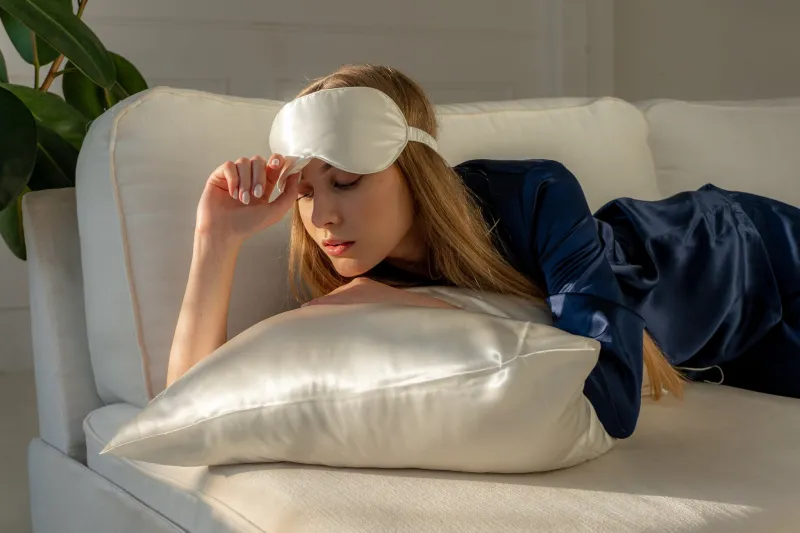
What Your Hair Actually Needs at Night: The Science of Silk and Strand Health
Most of us spend a decent amount of money on shampoo, conditioner, and leave-in treatments. We deep condition on Sundays. We air dry instead of heat styling. And yet — frizz, breakage, and those stubborn split ends just keep showing up.
Here's the thing almost nobody talks about: you're spending roughly a third of your life with your hair pressed against a surface that could be quietly working against everything you're trying to achieve. That surface? Your pillowcase.
The conversation around silk and hair health has moved well beyond beauty influencer territory. Trichologists, dermatologists, and materials scientists are increasingly pointing to fabric friction as a legitimate — and largely overlooked — factor in hair damage. And silk, it turns out, has some pretty compelling credentials.
The Friction Problem Nobody Warned You About
Let's start with the basics. Hair strands have a cuticle — a layered, scale-like outer structure that protects the inner cortex of each strand. When those scales lie flat, hair looks smooth, shiny, and healthy. When they're disrupted, you get frizz, dullness, and over time, breakage.
Cotton, the material covering the majority of American pillowcases, has a relatively rough surface at the microscopic level. Every time you shift in your sleep — and the average person moves anywhere from 40 to 60 times a night — your hair is dragging across that texture. The cuticle catches, lifts, and eventually weakens.
"Mechanical friction is one of the most underappreciated sources of hair damage in my patients," says one New York-based trichologist who works with clients experiencing thinning and chronic breakage. "I always ask about their pillowcase. It sounds simple, but it genuinely changes outcomes."
Silk, by contrast, has a surface friction coefficient that's dramatically lower than cotton. Hair glides rather than grips. The cuticle stays intact.
What the Research Is Starting to Show
The science is still catching up to the anecdotal evidence, but what's emerging is encouraging. Studies examining textile friction and hair fiber integrity have found that smoother surfaces — particularly those with low friction coefficients like silk and satin — produce measurably less cuticle damage over repeated contact.
A 2019 study published in the Journal of Cosmetic Science examined how different fabric surfaces affected hair fiber structure after simulated overnight contact. Silk-like surfaces consistently produced fewer lifted cuticle scales compared to cotton equivalents.
Dr. Aimee Vyas, a dermatologist practicing in Chicago who specializes in scalp and hair conditions, puts it plainly: "We know that physical trauma is cumulative. If you're already dealing with chemically processed, color-treated, or heat-styled hair, adding nightly friction on top of that is genuinely counterproductive. Reducing mechanical stress at the source — the pillowcase — is low-hanging fruit."
It's also worth noting that cotton is highly absorbent. That's great for a bath towel, but not ideal for your hair. Cotton wicks moisture from your strands as you sleep, which contributes to dryness and frizz, especially for people with naturally curly or textured hair who already struggle with moisture retention.
Silk is far less absorbent, meaning the natural oils and any products you apply before bed actually stay where you put them — on your hair — rather than transferring to your pillowcase by morning.
Debunking the Myths Standing Between You and Better Hair
Myth #1: Satin is just as good as silk.
Satin is a weave pattern, not a material. Most affordable "satin" pillowcases are made from polyester. While polyester satin does reduce friction compared to cotton, it lacks the natural protein structure of silk (which is composed largely of fibroin, a protein similar in composition to human hair) and doesn't breathe the same way. For people with sensitive scalps or those prone to night sweats, the difference is real.
Myth #2: Only people with long or damaged hair benefit.
Friction affects every hair type. Short hair, natural hair, fine hair, thick hair — all of it experiences cuticle disruption during sleep. People with tightly coiled or 4C hair textures, in particular, often report significant improvements in moisture retention and reduced breakage after switching to silk.
Myth #3: It's just a luxury product with a luxury price tag.
Quality silk pillowcases have become far more accessible in the US market over the past several years. And when you factor in what you're spending on treatments, masks, and professional services to address damage that might be preventable — the math starts to look pretty different.
Going Beyond the Pillowcase: Silk Hair Accessories
The scalp and strand benefits of silk don't stop at bedtime. Silk scrunchies, sleep caps, and hair wraps are gaining real traction among people who've noticed that elastic bands and traditional hair ties leave creases, cause mid-shaft breakage, and create tension at the hairline over time.
Silk scrunchies hold hair without the mechanical grip that damages strands. Sleep caps made from silk are especially popular in the natural hair community, where protecting curl patterns and preserving moisture overnight is part of a well-established care ritual.
For anyone dealing with postpartum hair loss, traction alopecia, or general hair thinning, reducing physical stress from accessories is often one of the first recommendations from dermatologists and trichologists alike.
How to Actually Integrate Silk Into Your Routine
You don't have to overhaul everything at once. Here's a practical starting point:
- Start with your pillowcase. It's the easiest swap and the one you'll interact with every single night. Look for 100% mulberry silk with a momme weight of at least 19 — that's a good indicator of quality and durability.
- Replace your hair ties gradually. As your current elastics wear out, replace them with silk scrunchies. Your hairline will thank you.
- Add a silk sleep cap if you have curly or textured hair. Even if you're using a silk pillowcase, a cap adds an extra layer of protection and keeps your style intact.
- Be patient. Cuticle repair takes time. Most people report noticeable changes in frizz and manageability within two to four weeks of consistent use.
Hair health is cumulative — damage builds slowly, and so does recovery. But the good news is that one of the most effective tools in your arsenal is also one of the simplest. Sometimes the most meaningful upgrade isn't a new product. It's changing the surface your hair sleeps on.